Key takeaways
- Florida law limits how HOAs can restrict artificial turf that is not visible from the street or neighboring lots. Front yards are still usually up to your HOA.
- Turf in full sun gets hot. Placement, lighter infill, shade and a quick rinse make a big difference.
- Good turf drains through its backing into a compacted base, so it handles Florida rain.
- Compared with sod: no mowing, fertilizer or chinch bugs, and far less watering.
Can my HOA stop me from installing artificial turf?
Florida’s homeowners’ association law, section 720.3075, Florida Statutes, was updated in 2024 to limit what HOAs can prohibit when it is not visible from the frontage of the property or from an adjacent parcel, and artificial turf is one of the items named. In practice:
- Backyards that are not visible from the street or neighbors generally have more protection.
- Front yards and visible areas are still usually subject to your HOA’s rules and approval.
- Florida law also protects Florida-friendly landscaping under the same section.
How “visible” is interpreted is still being debated, and HOA documents vary. Read your community’s rules and submit for architectural approval when in doubt. This is general information, not legal advice.
Does artificial turf get hot in Florida?
Yes, in direct afternoon sun turf can get much hotter than natural grass. It is manageable:
- Placement: use turf where there is some shade, or plan play areas under trees or a pergola.
- Infill and fibers: lighter or cooling infills and heat-reflective fibers help.
- A quick rinse: a short spray of water cools the surface fast before kids or pets play.
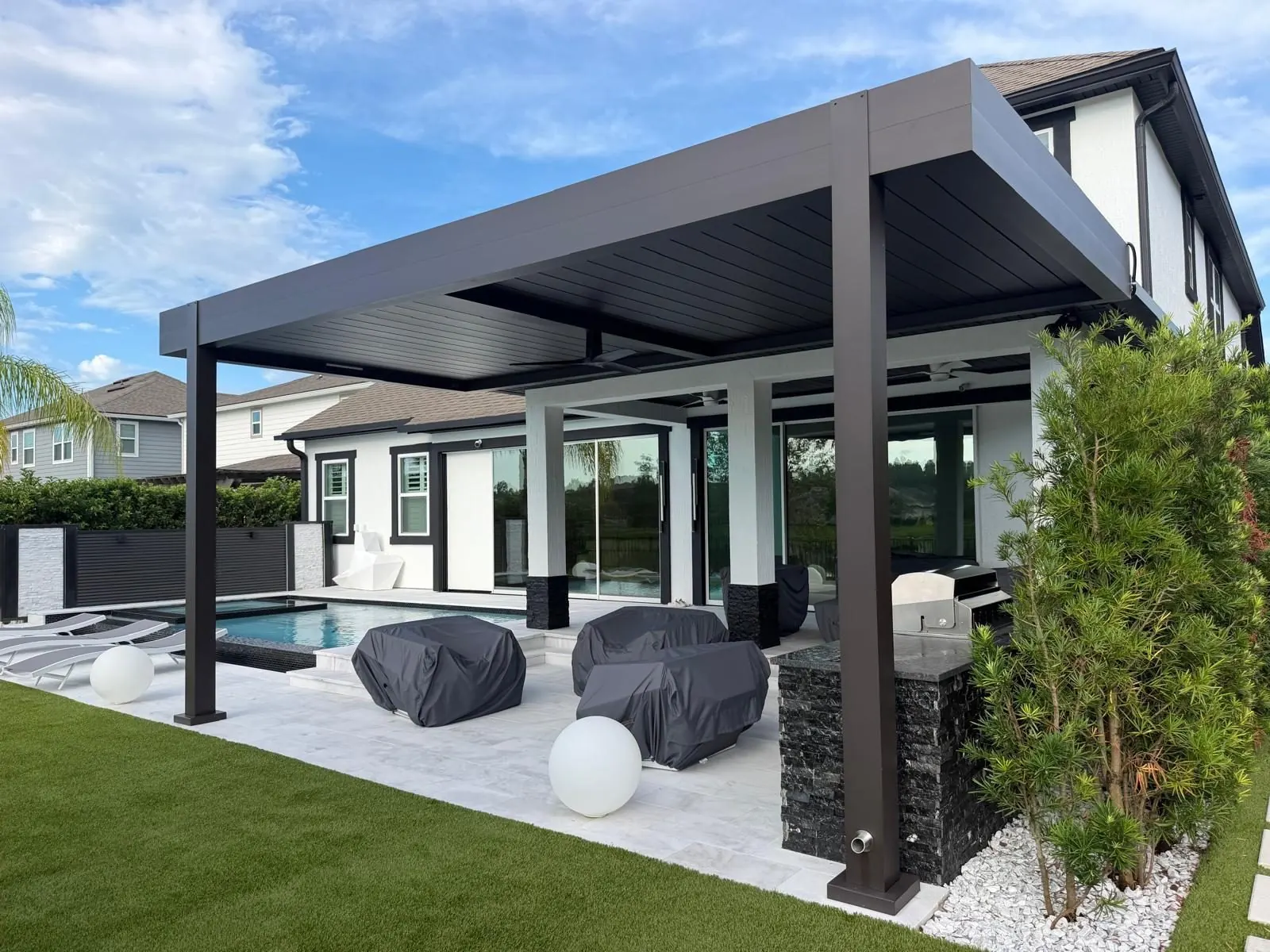
- Mix materials: turf strips between light pavers look great and stay more comfortable than one large turf field.
Drainage and the base
Quality turf has a perforated or fully permeable backing. Underneath, the existing soil is excavated and replaced with a compacted aggregate base that lets water drain through. Done right, turf is dry minutes after a summer storm. Done wrong, it puddles and smells.
Pets
Turf works well for dogs: no mud and no dug-up patches. Choose a pet-friendly turf with a fully permeable backing, use an antimicrobial infill, and rinse the favorite spots regularly.
Artificial turf vs. natural grass
| Artificial turf | Natural grass (sod) | |
|---|---|---|
| Watering | None, except occasional rinsing | Regular, within local watering-day rules |
| Mowing and edging | None | Weekly in season |
| Fertilizer and pests | None (no chinch bugs, no fungus) | Fertilizer, pest and weed control |
| Look in winter and drought | Green all year | Can brown or thin out |
| Heat in full sun | Hotter | Cooler |
| Upfront cost | Higher | Lower |
Is artificial turf right for your backyard?
If you want a green, clean area for kids, pets or a putting green, without mowing, fertilizing or fighting chinch bugs, turf is a strong choice, especially combined with pavers, planters and shade. In our design studio you can add turf to a backyard and see how it looks with the rest of the project.
Frequently asked questions
Is artificial turf legal in Florida?
Yes. The question is usually your HOA. Florida law limits how HOAs can restrict artificial turf that is not visible from the street or neighboring lots; visible areas are usually still subject to HOA approval.
How long does artificial turf last in Florida?
Quality turf installed on a proper base typically lasts many years. UV-stabilized fibers and a well-drained base are what make it last.
Does artificial turf flood in heavy rain?
Not when it is installed correctly. Permeable backing and a compacted aggregate base let water drain quickly.
Is artificial turf good for dogs?
Yes, with a pet-friendly, fully permeable turf, an antimicrobial infill and regular rinsing.
See it in your backyard before you build.
Book a visit. We measure, design your backyard in 3D and give you a written quote.