Key takeaways
- Concrete slabs are simple, but in Florida’s sandy soil they often crack, and cracks are hard to repair invisibly.
- Pavers are individual units on a compacted base. They flex instead of cracking, and single pieces can be replaced.
- Stamped concrete looks like stone at first, but it is still a slab and can crack, fade and get slippery.
- Around a pool, light-colored pavers, travertine or porcelain stay cooler underfoot.
The basic difference
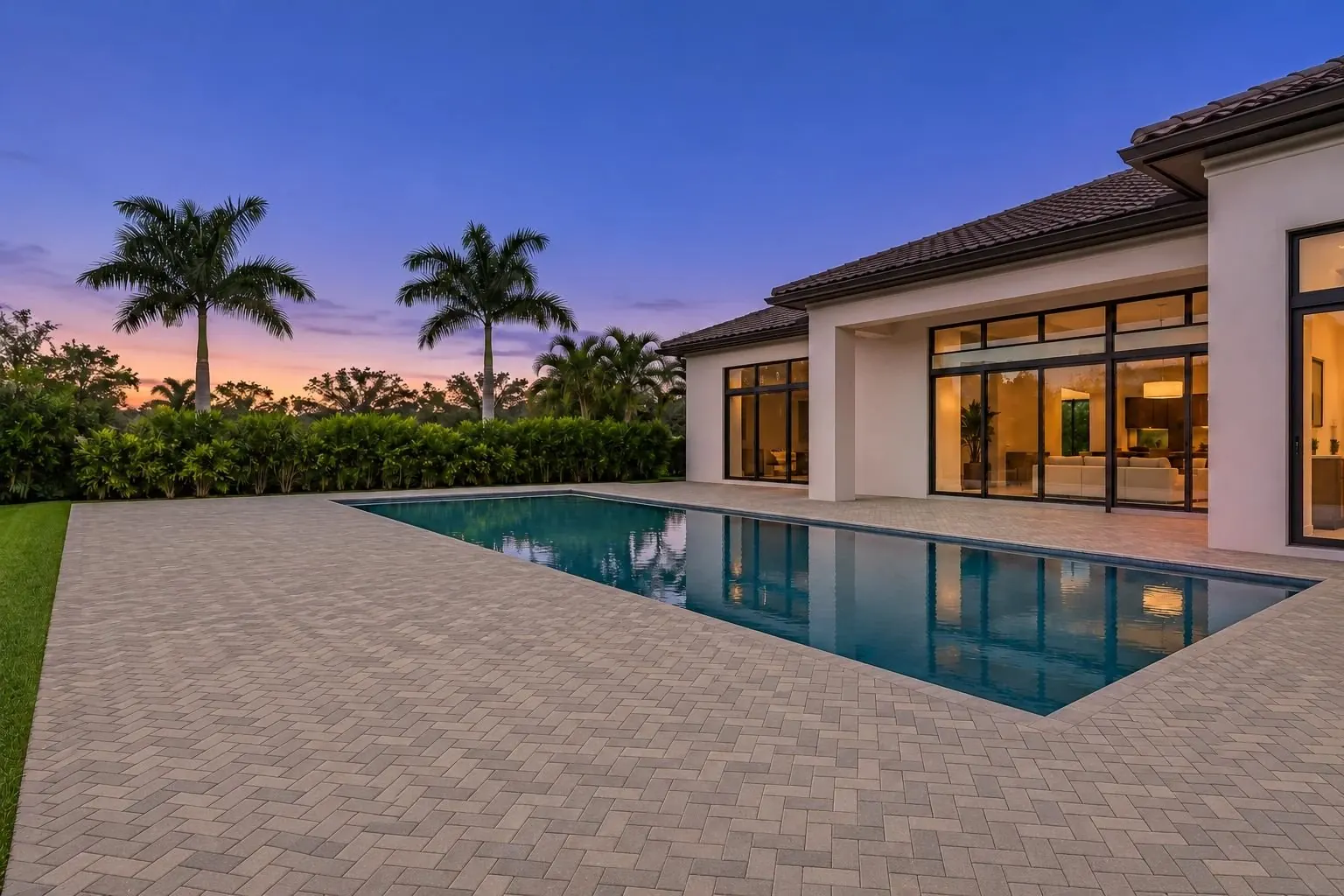
Poured concrete is one continuous slab. Pavers are individual pieces (concrete, brick, travertine or porcelain) laid on a compacted base and locked together with sand in the joints. That one difference explains almost everything else.
Side by side
| Pavers | Poured concrete | Stamped concrete | |
|---|---|---|---|
| Look | Many shapes, colors and patterns | Plain, functional | Imitates stone or brick |
| Cracking | Joints let it flex; resists cracking | Common as soil shifts | Same as concrete, and more visible |
| Repairs | Lift and replace single pieces | Patches rarely match | Patches are very hard to match |
| Rain and drainage | Joints and base help water drain | Depends on slope only | Depends on slope only |
| Maintenance | Refill joint sand; seal if desired | Clean; seal optional | Reseal regularly to keep color |
| Slip resistance | Good texture | Good if broom-finished | Can be slippery when sealed and wet |
| Upfront cost | Usually higher than plain concrete | Usually the lowest | In between |
Why Florida changes the answer
Much of Central Florida sits on sandy soil that settles and shifts, and our summers bring heavy daily rain. A rigid slab has nowhere to go when the ground moves, so it cracks. A paver system built on a properly compacted base moves slightly and stays intact, and if a section ever settles, it can be lifted, re-leveled and relaid with the same pavers.
The base is what makes or breaks a paver project: excavation, compacted aggregate, bedding sand, edge restraint and correct slope away from the house and the pool.
Around the pool
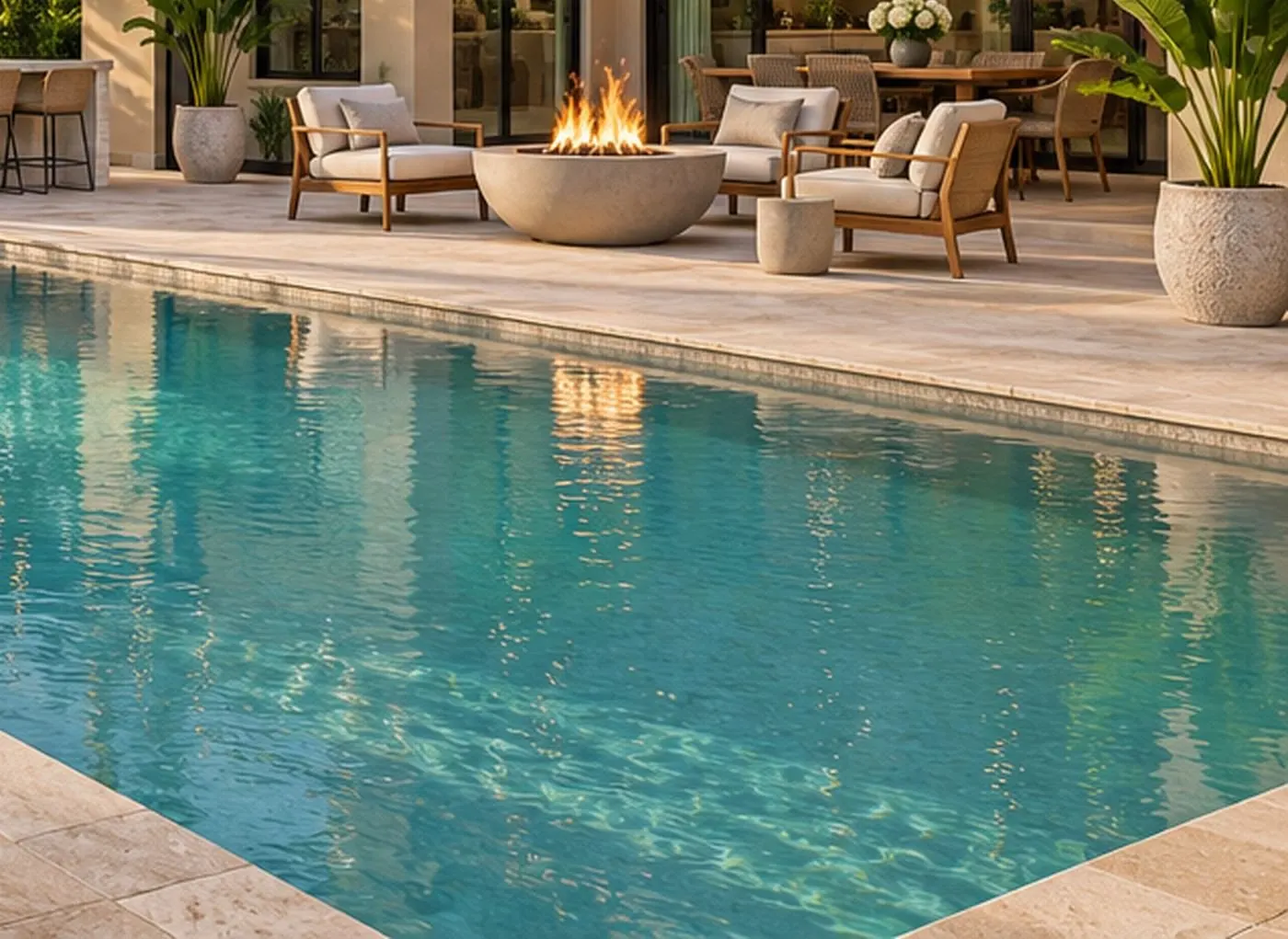
Pool decks deserve their own decision because of bare feet and heat. Lighter colors stay cooler; dark pavers can get very hot in the afternoon sun. Many homeowners choose travertine or porcelain around the water. We compare them in our guide to the best pool deck material for Florida.
Paver maintenance, honestly
- Joint sand: rain and pressure washing wash some out. Polymeric sand hardens and resists weeds and ants better.
- Sealing: optional, but it enhances color and makes cleaning easier.
- Cleaning: a gentle wash once or twice a year keeps mildew down in shady areas.
Which one should you choose?
If the goal is the lowest upfront cost for a utility area, concrete does the job. If you want a patio or pool deck that looks high-end, handles Florida’s soil and rain and can be repaired invisibly, pavers are usually the better long-term choice. Pavers also pair well with artificial turf for low-maintenance green areas.
Frequently asked questions
Are pavers better than concrete in Florida?
For most patios and pool decks, yes: pavers handle shifting sandy soil without cracking and can be repaired by replacing single pieces. Concrete costs less upfront but cracks are common and hard to hide.
Do pavers get hot?
Dark pavers in full sun can get hot. Lighter colors, travertine and some porcelain pavers stay noticeably cooler underfoot.
Can pavers go over an existing concrete slab?
Sometimes, if the slab is sound, has the right slope and there is enough height at doors and the pool edge. It needs to be checked on site.
How do you keep weeds and ants out of pavers?
A proper base, polymeric joint sand and an occasional top-up of the joints prevent most weeds and ant hills.
See it in your backyard before you build.
Book a visit. We measure, design your backyard in 3D and give you a written quote.