Key takeaways
- Color matters as much as material: light surfaces stay cooler underfoot.
- Travertine is natural stone, porous and comfortable barefoot; it should be sealed, especially with salt water pools.
- Porcelain pavers are dense, stain-resistant and low-maintenance; choose an outdoor, slip-resistant finish.
- Concrete pavers are versatile and durable; pick lighter colors for areas you walk barefoot.
What matters around a pool
- Heat underfoot. Can you walk on it at 3 pm in July?
- Slip resistance. Wet feet, kids running.
- Water and chemicals. Splash-out, chlorine or salt.
- Maintenance. Sealing, cleaning, mildew in shady corners.
- Look. The deck frames the water and the whole backyard.
Side by side
| Travertine | Porcelain pavers | Concrete pavers | |
|---|---|---|---|
| Heat underfoot | Stays comfortable, especially light tones | Depends on color; light tones stay cooler | Light colors fine; dark colors get hot |
| Slip resistance | Good natural texture (tumbled finish) | Good if rated for outdoor/pool use | Good texture |
| Stains and water | Porous; sealing recommended | Very low absorption; resists stains | Some absorption; sealing optional |
| Salt water pools | Seal and maintain to protect the stone | Handles it well | Seal to protect the surface |
| Maintenance | Periodic sealing; fill small pits | Lowest; just cleaning | Joint sand; optional sealing |
| Look | Warm, classic, natural variation | Clean and modern; stone or wood looks | Many colors and shapes |
Travertine
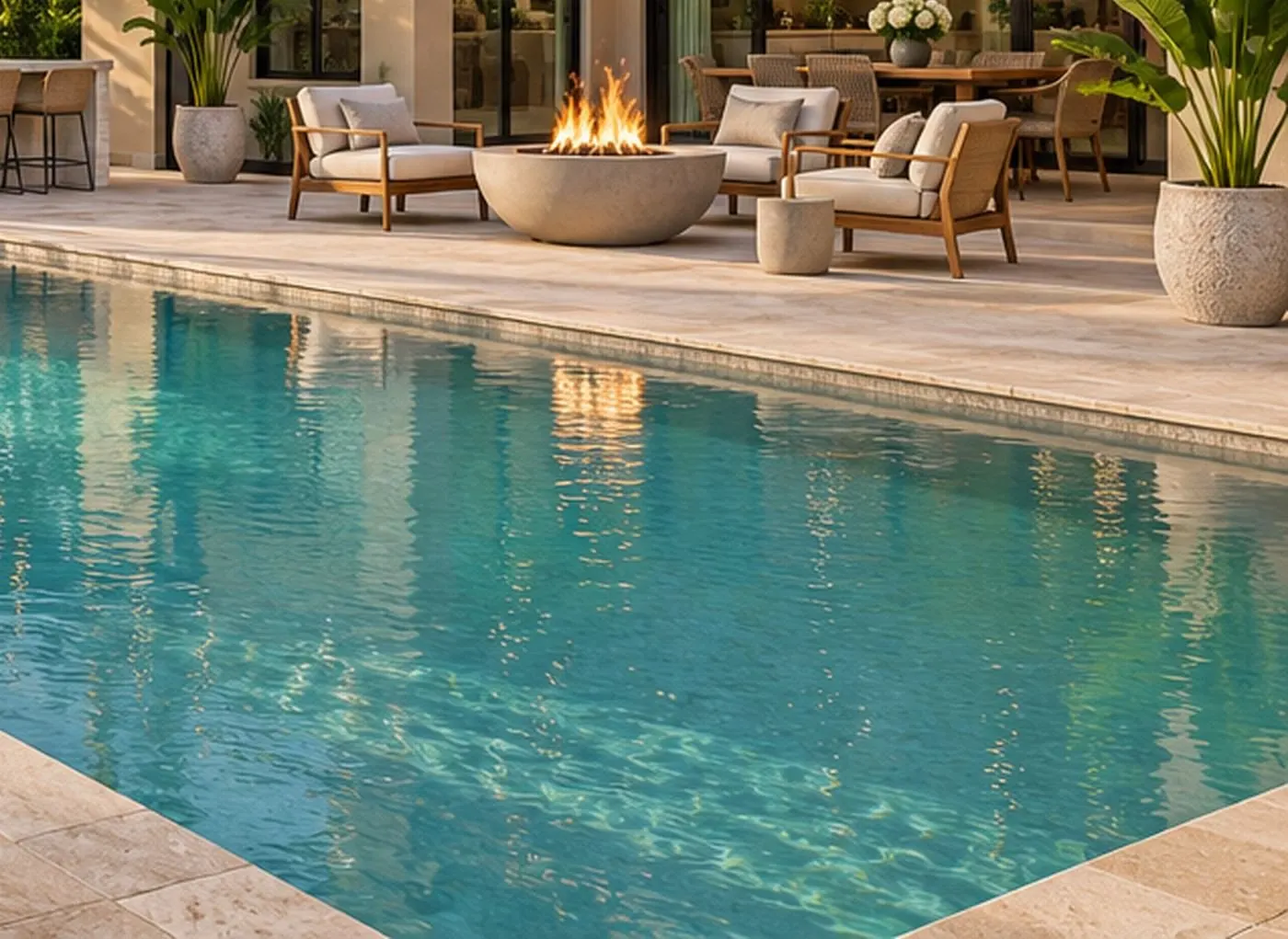
Travertine is the classic Florida pool deck for a reason. It is natural stone with a soft, matte surface that stays comfortable barefoot, and its light, warm tones suit Mediterranean and modern homes alike. Because it is porous, it should be sealed, and with salt water pools that sealing and regular rinsing matter more. Natural pits and color variation are part of its character.
Porcelain pavers
Outdoor porcelain pavers (usually 2 cm thick) are dense, almost non-absorbent and highly resistant to stains, chlorine and salt. They look crisp and modern and come in stone, concrete and wood looks. The key is choosing a product rated for outdoor and pool areas with a slip-resistant finish, and picking a lighter color for sunny areas.
Concrete pavers
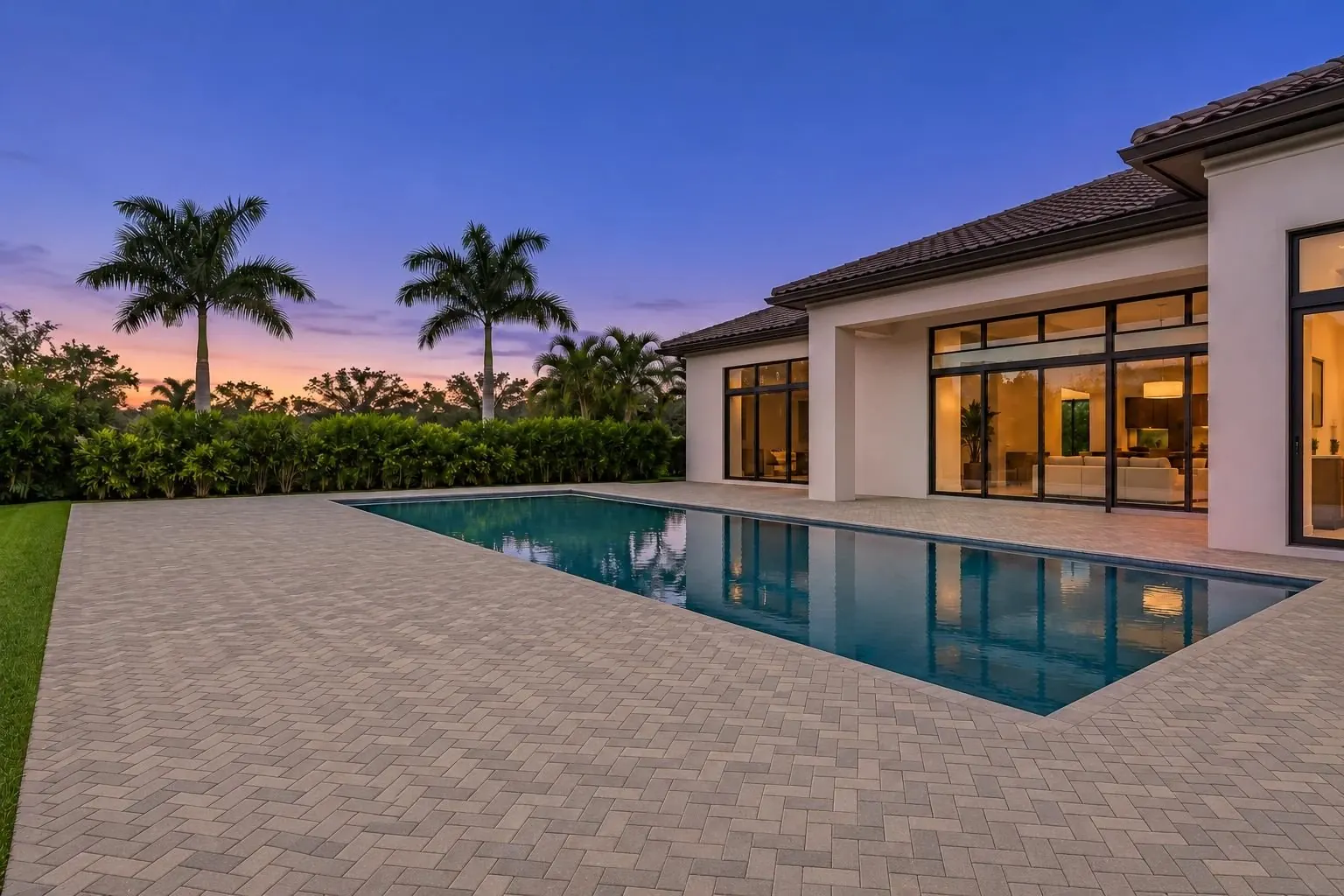
Concrete pavers offer the widest range of colors and shapes, are durable and repair easily. For pool decks, choose lighter colors where people walk barefoot and use a coordinated coping around the water. See our pavers vs. concrete guide for why we recommend pavers over a slab.
The details that make a great pool deck
- Coping: the edge around the pool should be comfortable to sit on and match the deck.
- Slope and drainage: water should run away from the pool and the house, never toward them.
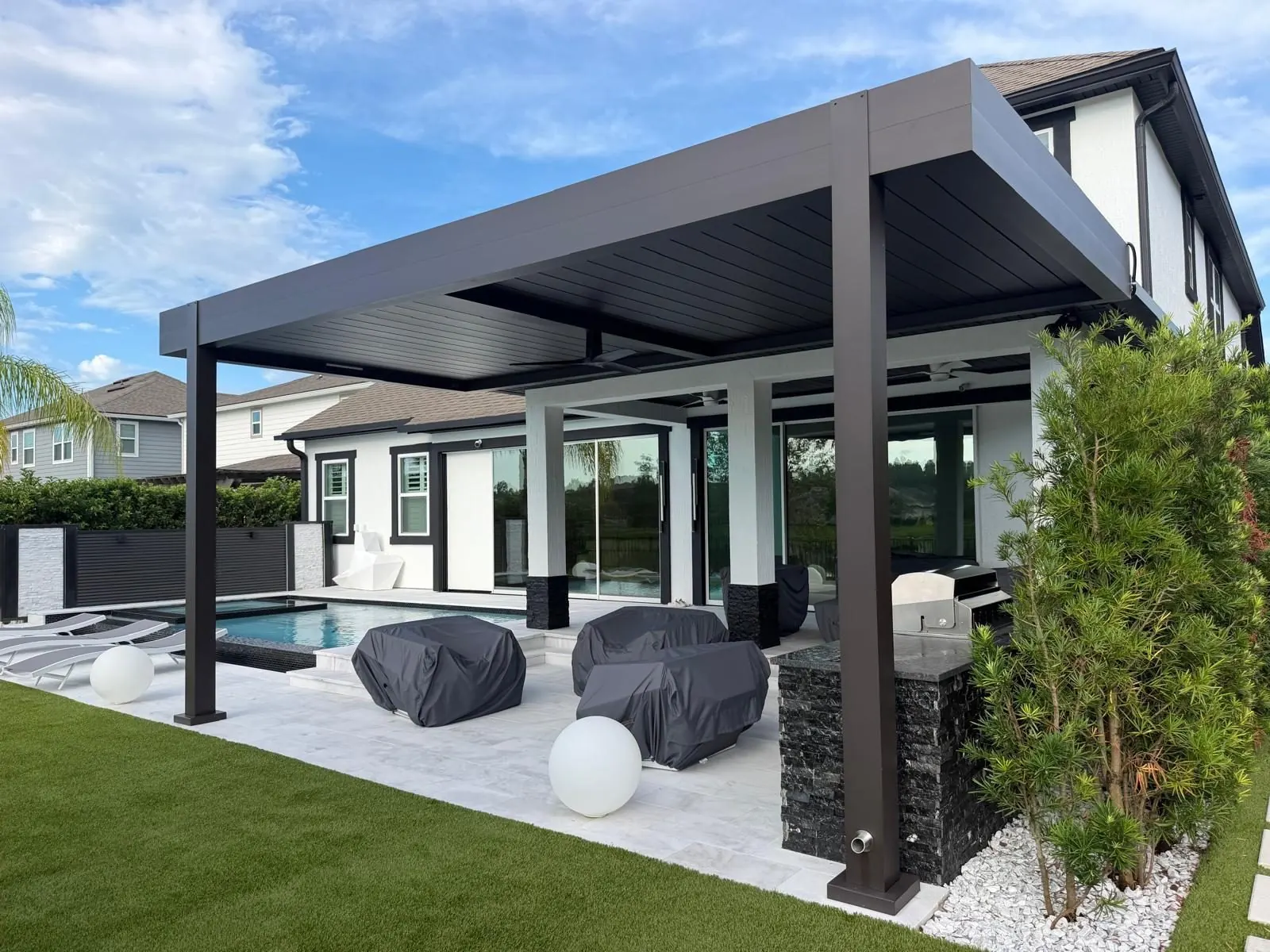
- Shade: an insulated pergola or a palm in the right place makes the deck usable at midday.
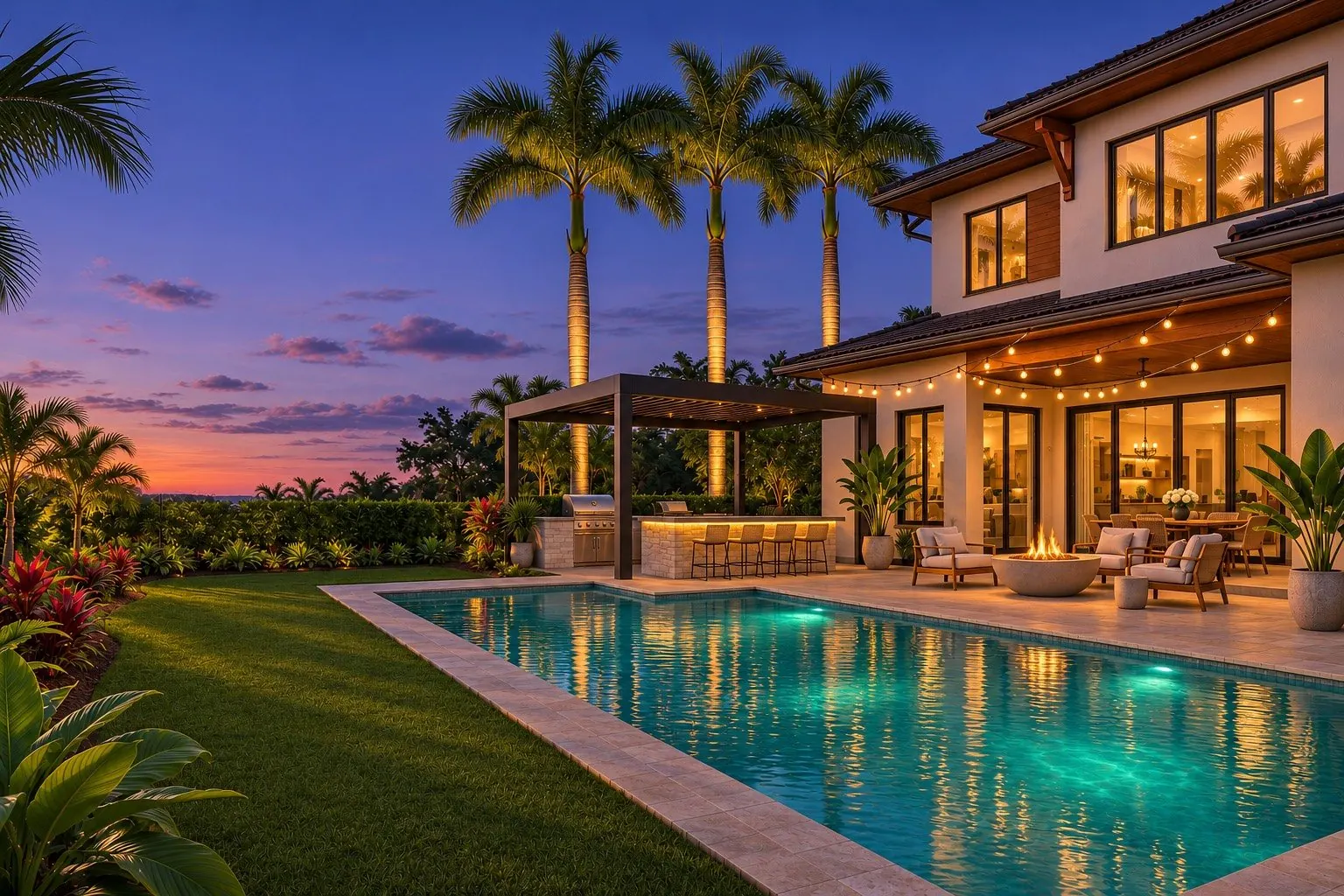
- Lighting: step and path lights make the deck safe and beautiful at night.
So which one?
For a natural, classic deck that is comfortable barefoot, travertine. For the lowest maintenance and a modern look, porcelain. For flexibility in colors and patterns, concrete pavers in light tones. In our design studio you can switch between all three on the same backyard and see the difference.
Frequently asked questions
What pool deck material stays the coolest in Florida?
Light-colored surfaces stay coolest. Light travertine is famous for staying comfortable barefoot; light porcelain and light concrete pavers also perform well.
Is travertine good for salt water pools?
Yes, with care: seal it and rinse splash-out areas so salt does not build up in the stone.
Is porcelain slippery around a pool?
Not if you choose a porcelain paver rated for outdoor and pool use with a slip-resistant finish. Indoor porcelain tile is not suitable.
Can I put a new deck over my old pool deck?
Sometimes. It depends on the condition and height of the existing deck, the coping and the doors. We check this on the site visit.
See it in your backyard before you build.
Book a visit. We measure, design your backyard in 3D and give you a written quote.